From Static Images to Interactive Shopping: The Rise of 3D Product Configurators
Explore how 3D product configurators are transforming online shopping with interactive experiences that boost engagement and customer confidence.
 hexacoder
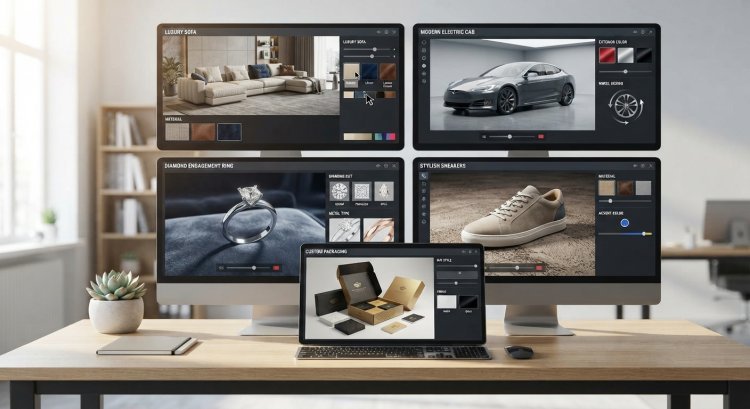
For decades, online shopping relied on a simple formula: upload a few product photos, write a description, and hope the customer's imagination did the rest. That formula worked well enough when e-commerce was new. But as buyer expectations have evolved, so has the technology behind how products are presented online.
One of the most significant shifts in recent years has been the move from static product imagery to interactive, real-time 3D experiences. At the center of this shift is the 3D product configurator a tool that is quietly changing how people discover, explore, and decide on purchases across industries.
The Problem with Static Product Images
Static images have always had limitations. A photograph captures one moment, one angle, one configuration. If a product comes in twelve colors, three sizes, and five material options, showing every combination through photography alone becomes expensive, time-consuming, and often impractical.
More importantly, static images leave a gap between what a customer sees and what they actually receive. That gap creates uncertainty and uncertainty leads to hesitation, abandoned carts, and returns.
Research consistently shows that one of the top reasons customers return products is that the item looked different in person than it did online. No amount of high-resolution photography fully solves this problem when the product itself is highly variable.
What Is a 3D Product Configurator?
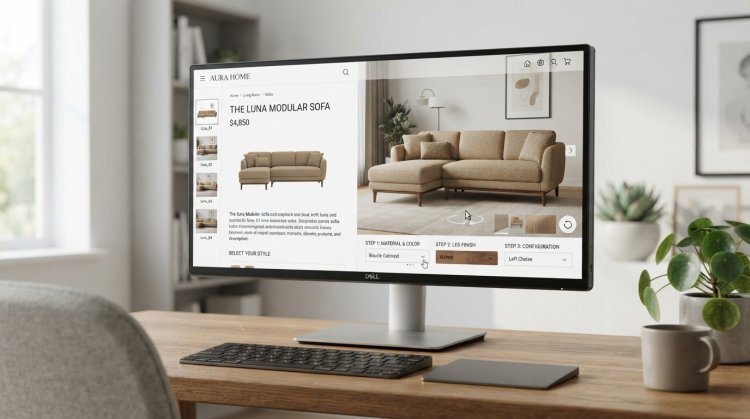
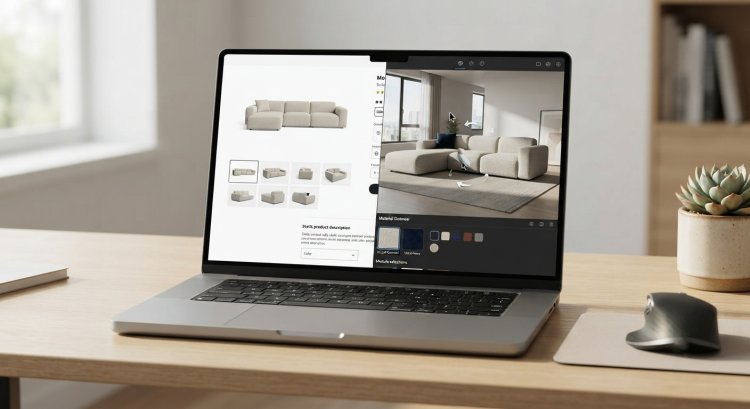
A 3D product configurator is an interactive tool embedded on a website or platform that allows users to customize a product in real time and view the result as a photorealistic 3D model. As the user makes changes selecting a color, swapping a material, adjusting a dimension the visual updates instantly to reflect exactly what they have chosen.
Unlike a standard product gallery, a 3D product configurator does not show pre-rendered images of fixed variants. It is rendering the product dynamically based on the user's selections, often allowing for hundreds or thousands of unique combinations to be visualized without generating a single physical sample or photography session.
The core components of most configurators include:
- A real-time 3D engine that renders the product model with accurate lighting, shadows, and materials
- A configuration interface where users select options such as color, finish, size, or components
- A 3D viewer that lets users rotate, zoom, and inspect the product from any angle
- Optional output such as a summary, quote, or direct add-to-cart action
How the Technology Evolved
The idea of letting customers customize products before buying is not new. Car manufacturers offered paper-based configuration options decades ago. What has changed is the ability to bring that process online with photorealistic visual feedback.
Early web-based configurators in the 2000s were limited to swapping flat 2D images essentially showing a different photograph when a user selected a different color. These tools were better than nothing, but they were rigid and costly to maintain as product ranges expanded.
The rise of WebGL a browser-based graphics standard changed everything. It allowed 3D models to be rendered directly inside a web browser without requiring any plugin or app download. Suddenly, the same kind of real-time 3D rendering that existed in desktop software became accessible to anyone with a modern browser.
Over the past decade, improvements in 3D modeling pipelines, cloud rendering, and compression technology have made 3D product configurators faster, more realistic, and easier to deploy at scale. What once required a significant technical team to build can now often be implemented through established platforms.
Industries Where 3D Product Configurators Are Making an Impact
The 3D product configurator is not limited to any single category. It has found practical application across a wide range of sectors.
Furniture and Home Decor
Furniture is one of the earliest and most successful adopters. Configuring a sofa in a specific fabric, leg finish, and dimension and seeing the result in 3D addresses a core anxiety buyers have about whether a piece will work in their space. Some furniture platforms have taken this further by integrating augmented reality, allowing users to place the configured item in a photo of their own room.
Automotive
Car manufacturers have used online configurators for years, but the experience has grown considerably more sophisticated. Today's automotive 3D product configurator tools render vehicles with accurate paint finishes, wheel reflections, and interior materials. They function as virtual showrooms where a buyer can spend significant time building and reviewing their exact specification before visiting a dealership.
Footwear and Apparel
Brands in footwear have successfully used configurators to let customers design shoes by selecting colors for individual panels, choosing sole options, and adding personal text. The approach turns a standard product page into a creative experience, increasing time on site and emotional investment in the final product.
Industrial and B2B Products
Configurators are not confined to consumer markets. In B2B contexts, complex products such as machinery, modular shelving systems, custom packaging, or engineered components benefit significantly from configurator tools. A sales team can use a 3D product configurator to walk a client through options in real time, generating an accurate visual and a quote simultaneously.
Jewelry
Jewelry presents a unique set of customization needs: metal type, stone selection, setting style, and engraving. A 3D product configurator in this space allows customers to compose a piece and see a photorealistic rendering before placing a made-to-order request.
Why Buyers Respond to Interactive Configuration
There is a behavioral dimension to why configurators work that goes beyond the practical benefit of seeing accurate visuals.
When a person spends time configuring a product making decisions, seeing the result, refining the choices they begin to develop a sense of ownership over it. Behavioral researchers refer to this as the endowment effect: the more invested someone feels in an object, the more they value it. A customer who has spent fifteen minutes building a custom product is significantly more committed to it than one who simply picked an option from a dropdown.
Configurators also reduce cognitive load at the point of decision. Rather than holding multiple variables in mind and trying to imagine the result, the buyer can simply see it. This clarity shortens the decision cycle and reduces the likelihood of post-purchase doubt.
The Relationship Between Configurators and Returns
Product returns are a persistent challenge in e-commerce, both operationally and environmentally. When customers receive products that do not match their expectations, the cost falls on both the business and the buyer.
A 3D product configurator that accurately represents the final product in the right color, finish, and configuration materially reduces this mismatch. Several brands across furniture, footwear, and apparel have reported measurable reductions in return rates after introducing configurator experiences. While individual outcomes vary based on product category and implementation quality, the directional relationship between better pre-purchase visualization and fewer returns is well established.
Considerations When Implementing a 3D Product Configurator
For businesses evaluating whether to adopt a 3D product configurator, a few practical considerations are worth keeping in mind.
Asset quality matters: A configurator is only as good as the 3D models and material textures powering it. Low-quality assets will produce unconvincing results regardless of the underlying technology. Investing in accurate, detailed 3D models is foundational.
Performance affects adoption: If a configurator loads slowly or feels laggy during interaction, users will abandon it. Optimization for web performance, including progressive loading and mobile responsiveness is essential.
Complexity should be proportional to need: Not every product requires a highly sophisticated configurator. A simpler product with fewer variables may be well served by a straightforward tool, while a complex, high-consideration product justifies greater investment in the experience.
Integration with existing systems: inventory, pricing engines, CRM, and order management determines how much operational value the configurator delivers beyond the customer experience itself.
The Broader Shift in Online Shopping Expectations
The 3D product configurator is one expression of a broader change in what online shoppers expect. Passive browsing through image galleries is giving way to active, participatory experiences where the customer shapes what they see.
This shift is being driven partly by technology that delivers faster, better internet and more capable mobile devices, and partly by a generation of buyers who have grown up with interactive digital experiences and bring those expectations to commerce.
Static images will not disappear. They remain practical for many product types and contexts. But for products that involve meaningful choices, significant investment, or high customization, the static image alone is increasingly insufficient. The 3D product configurator fills that gap, giving buyers the confidence and clarity that a photograph never quite could.
Conclusion
The evolution from static product images to interactive 3D configuration represents a meaningful step forward in how commerce works online. It is not simply a visual upgrade. It changes the dynamic between a buyer and a product, reduces the uncertainty that drives returns, and allows businesses to represent their full range of options without the cost and logistics of traditional photography.
As the technology continues to mature and become more accessible, the 3D product configurator is likely to move from a competitive differentiator to a standard expectation across many product categories much as high-resolution photography itself once did.