The Real Cost of On-Demand App Development Services Explained
Understand the real cost of on-demand app development services, from pricing models and hidden fees to what actually drives your project budget.
 Stevejonas
"How much will it cost?" is usually the very first question a business owner asks, and honestly, it's a fair one. The frustrating part is that there's rarely a clean answer. Anyone who gives you a number within the first five minutes of a conversation, without asking what you actually want built, is probably guessing. Real costs depend on a long list of moving parts, and understanding those parts is far more useful than chasing a single magic figure.
Why There's No Single Price Tag
Two businesses can both say they want "an app" and end up paying wildly different amounts, sometimes a difference of tens of thousands of dollars. That gap isn't random. It comes down to a handful of specific factors that shape almost every project.
Complexity Changes Everything
A basic app that displays information and lets users tap through a few screens is fundamentally different from one that needs live location tracking, in-app payments, or a recommendation engine running in the background. The more moving logic an app needs, the more development hours go into it, and hours are really what you're paying for at the end of the day. A food delivery app, for instance, needs to track drivers in real time, handle multiple payment methods, and sync order statuses across three different user types. That's a lot more work than a simple appointment booking app, even if both sound similarly "small" on paper.
Platform and Design Choices Matter Too
Building for iOS and Android separately, rather than using a shared codebase, adds time and therefore cost. It's not always the wrong choice, sometimes native performance matters enough to justify it, but it's a decision that affects the budget directly. Design plays a quieter but real role too. Highly custom interfaces with unique animations and layouts take longer to build than apps using more standard, template-style components. Neither approach is inherently better. It just depends on what the business actually needs.
Breaking Down What You're Actually Paying For
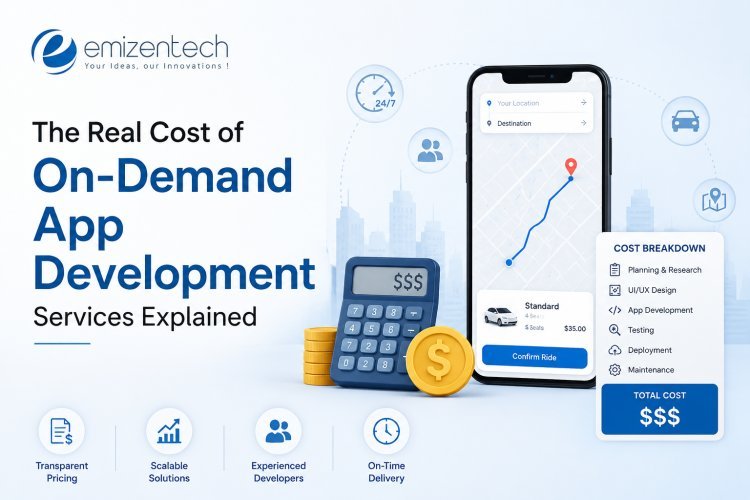
It helps to think of the total cost as a sum of several distinct phases rather than one lump sum, because each phase carries its own kind of work.
Planning, Design, and Development
Planning and discovery usually take less time than people assume but matter more than people assume too. This is where the team figures out what the app should actually do before anyone starts building anything. Design follows next, covering wireframes and visual screens that the client can react to before code gets written. Development itself eats up the largest chunk of both time and budget, since this is where the actual functionality comes together, screen by screen, feature by feature.
Testing and What Comes After Launch
Testing tends to get underpriced in people's mental math. Catching bugs before launch is far cheaper than fixing them after thousands of users have already downloaded the app and started leaving one-star reviews about a crash. Once the app is live, there's also ongoing maintenance to think about. Operating systems update, devices change, and an app that worked perfectly at launch can break six months later if nobody's keeping an eye on it.
Typical Price Ranges Across Project Types
Numbers help, even rough ones, so here's a general sense of where things tend to land. A simple app with limited features might fall somewhere between $10,000 and $25,000. A mid-complexity app, the kind with user accounts, a backend database, and maybe one or two third-party integrations, often runs $30,000 to $60,000. Anything genuinely complex, think real-time features, AI-driven personalization, or heavy data processing, can climb past $100,000 fairly easily. These ranges shift depending on the country and team you're working with too, since rates vary a lot region to region.
Hidden Costs Businesses Often Overlook
This is where budgets quietly get blown, not because anyone did anything wrong, but because certain costs just aren't obvious until you're already in the middle of a project.
Integrations, Compliance, and Ongoing Updates
Third-party integrations, like payment gateways or mapping services, often come with their own fees on top of the development cost itself. App store and compliance requirements can also add unexpected line items, especially for apps in regulated spaces like healthcare or finance, where extra security reviews and documentation take real time. And then there's the ongoing reality that an app isn't a one-time purchase. Updates, bug fixes, and compatibility checks for new OS versions are an ongoing cost that doesn't show up in the initial quote but absolutely shows up on the invoice a year later.
How Pricing Models Differ
Beyond the raw numbers, the way you're billed matters just as much as the total amount.
Fixed Price vs Time and Materials
A fixed price model sounds appealing because it feels predictable, and it works well when the scope is genuinely clear from day one. The risk is that any change request later can get expensive fast, since the original price assumed a fixed scope. Time and materials billing, where you pay for actual hours worked, offers more flexibility but requires more trust and more active involvement from the client, since costs can creep if nobody's watching the clock. Many businesses working with an established on-demand app development company find that a hybrid approach, fixed pricing for the core build with flexible billing for extras, tends to balance predictability with room to adapt.
Getting Genuine Value for What You Spend
The cheapest quote isn't automatically the worst choice, and the most expensive one isn't automatically the best. What actually matters is whether the price reflects real, transparent work. A provider offering reliable on demand app development services should be able to explain exactly what's included in a quote, not just hand over a number and expect blind trust. Asking detailed questions about what's covered, what counts as a change request, and how testing is handled tends to reveal far more about value than comparing two numbers side by side. Businesses exploring on demand app development for the first time often save themselves a lot of frustration simply by asking these questions early rather than after signing a contract.
Conclusion
Cost conversations around app development rarely have a tidy, one-line answer, and that's okay. The real value comes from understanding what drives the number rather than chasing the lowest one you can find. At EmizenTech, project costs are broken down clearly from the start, so businesses know exactly what they're paying for at every stage rather than being surprised by it later.
Frequently Asked Questions
1. Why do quotes from different companies vary so much for the same idea?
Usually, because each company is assuming a different scope behind the scenes. Two firms might interpret "social features" or "real-time tracking" very differently, and that interpretation drives the price.
2. Should I always negotiate for a lower price?
Not necessarily. It's often more useful to ask what's included rather than just pushing the number down, since cutting corners on testing or planning tends to cost more later.
3. Is it normal for costs to increase mid-project?
To some extent, yes, especially if new features get added along the way. A clear initial scope document helps limit how much this happens.
4. Does a higher budget guarantee a better app?
Not automatically. Budget helps, but clear communication and realistic planning often matter more than raw spending.