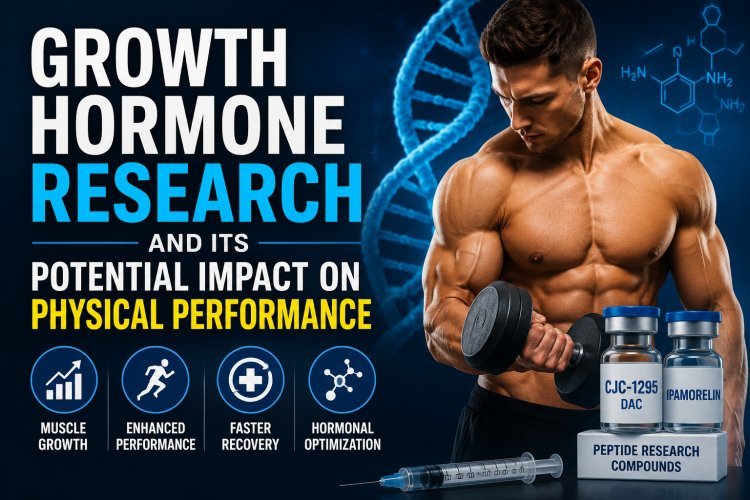
Growth Hormone Research and Its Potential Impact on Physical Performance
 pureaminos
The pursuit of improved physical performance has always been a major focus of scientific research. From nutrition and exercise protocols to hormonal studies, researchers continue to investigate the biological mechanisms that influence strength, endurance, recovery, and overall athletic potential. Among these areas of study, growth hormone research has gained considerable attention due to its possible connection with muscle development, recovery processes, and metabolic function.
Scientists are increasingly exploring Growth Hormone Peptides and their interactions with the body's natural hormone production pathways. Various peptide compounds have become subjects of interest in laboratory settings, particularly for understanding how hormonal regulation may influence physical performance and recovery mechanisms.
This article explores the current state of growth hormone research and examines its potential implications for physical performance studies.
Understanding Growth Hormone and Physical Performance
Growth hormone is a naturally occurring hormone produced by the pituitary gland. It plays an essential role in various physiological processes, including:
-
Protein synthesis
-
Tissue repair
-
Metabolism regulation
-
Muscle development
-
Bone health
-
Energy utilization
Researchers have long been interested in understanding how growth hormone influences physical capabilities. Scientific investigations suggest that growth hormone may contribute to muscle maintenance and recovery following physical stress, making it an important area of study in sports science and human performance research.
Because of these functions, scientists continue to investigate compounds that may influence growth hormone pathways in controlled research environments.
The Growing Interest in Growth Hormone Peptides
Growth Hormone Peptides have emerged as a major focus in peptide science due to their ability to interact with the body's natural growth hormone signaling pathways.
Unlike direct hormone administration, certain peptides are being studied for their potential ability to support the body's own production processes. Researchers are particularly interested in how these compounds may affect:
Muscle adaptation
Exercise recovery
Protein synthesis
Body composition
Metabolic efficiency
As research continues, these peptides provide valuable insight into the complex relationship between hormones and physical performance.
CJC-1295 & Ipamorelin in Scientific Research
Among the most widely discussed compounds in this field are CJC-1295 & Ipamorelin. These compounds are frequently examined together because of their complementary mechanisms within growth hormone research models.
CJC-1295 is studied for its ability to stimulate growth hormone-releasing hormone pathways, while Ipamorelin is investigated for its interaction with ghrelin receptors and growth hormone secretion mechanisms.
Researchers have shown interest in these compounds because they may offer valuable information regarding:
-
Hormonal signaling patterns
-
Recovery responses following physical stress
-
Changes in body composition
-
Long-term metabolic effects
It is important to note that current investigations primarily focus on laboratory and research applications, and further studies are necessary to understand their full potential.
Examining the Role of CJC-1295 DAC
One of the most commonly researched variants is CJC-1295 DAC. The term "DAC" refers to Drug Affinity Complex technology, which is designed to extend the compound's activity in research models.
Scientists studying CJC-1295 DAC aim to better understand:
Growth hormone pulse frequency
Hormonal stability
Recovery mechanisms
Potential metabolic effects
The extended duration of activity associated with this compound makes it a valuable subject for long-term peptide studies.
By examining these mechanisms, researchers can gain deeper insight into how growth hormone pathways may influence physical performance and recovery processes.
Growth Hormone and Muscle Recovery
Recovery is one of the most important components of athletic performance. Without adequate recovery, muscles cannot properly repair and adapt to physical training demands.
This is why Muscle Recovery Peptides have become an increasingly popular area of scientific investigation.
Researchers are exploring whether certain peptide compounds may influence:
-
Muscle protein synthesis
-
Connective tissue repair
-
Exercise-induced stress responses
-
Cellular regeneration mechanisms
Growth hormone itself has been associated with tissue maintenance and recovery processes, making peptide-based research particularly relevant for understanding how the body adapts following strenuous exercise.
Although many questions remain unanswered, ongoing investigations continue to provide valuable information regarding recovery physiology.
Peptide Therapy Research and Human Performance Studies
Peptide Therapy Research has expanded significantly over the past decade. Scientists are now examining various peptide compounds to better understand their biological effects and potential applications in health and performance research.
Areas currently being explored include:
Exercise adaptation
Muscle preservation
Hormonal regulation
Recovery optimization
Metabolic health
Researchers are especially interested in how peptide compounds may influence physical performance indirectly through improvements in recovery efficiency and hormonal balance.
The findings from these studies could contribute to future advancements in exercise science and regenerative medicine.
The Connection Between Growth Hormone and Body Composition
Body composition is another major focus of growth hormone research.
Scientific studies suggest that growth hormone pathways may influence:
-
Lean muscle maintenance
-
Fat metabolism
-
Energy utilization
-
Overall metabolic efficiency
Understanding these relationships could help researchers develop better strategies for studying performance optimization and metabolic health.
Several Peptide Research Compounds are currently being evaluated to determine how hormonal pathways influence body composition changes over time.
These investigations may eventually improve our understanding of how the human body responds to exercise, recovery, and nutritional interventions.
Anti-Aging Research and Physical Performance
The relationship between aging and physical performance has become an important topic in modern science.
As individuals age, natural growth hormone production typically declines. This decline is often associated with changes in:
-
Muscle mass
-
Recovery capacity
-
Energy levels
-
Body composition
For this reason, Anti-Aging Peptide Research has gained significant interest among scientists seeking to understand the biological mechanisms of aging.
Researchers are investigating whether certain peptide compounds may provide insights into age-related physiological changes and how these changes affect physical performance.
Although much of this work remains in the experimental stage, the findings could contribute to future research in longevity science and healthy aging strategies.
Potential Future Applications of Growth Hormone Research
Growth hormone studies continue to evolve rapidly. Future research may help scientists better understand:
Recovery optimization strategies
Exercise adaptation mechanisms
Hormonal influences on performance
Age-related physiological changes
Metabolic health and body composition
As researchers gather more data, peptide science may contribute to a broader understanding of human performance and recovery biology.
However, it is essential to recognize that many of these compounds remain under investigation, and additional clinical research is necessary before definitive conclusions can be drawn regarding their long-term effects and applications.
Conclusion
Growth hormone research remains one of the most fascinating areas of modern exercise and metabolic science. Studies involving Growth Hormone Peptides, CJC-1295 & Ipamorelin, and other Peptide Research Compounds continue to expand our understanding of hormonal regulation, recovery mechanisms, and physical performance.
Investigations into CJC-1295 DAC and other peptide-based approaches are helping scientists uncover new information about muscle adaptation, recovery processes, and body composition. At the same time, advancements in Peptide Therapy Research and Anti-Aging Peptide Research are opening new avenues for understanding how hormones influence human physiology throughout the lifespan.
While many questions remain unanswered, ongoing scientific exploration of Muscle Recovery Peptides and growth hormone pathways may ultimately provide valuable insights into the future of performance and recovery research.