How to Pair Evergreen and Deciduous Trees for a Year-Round Landscape in Chicago
 travishead
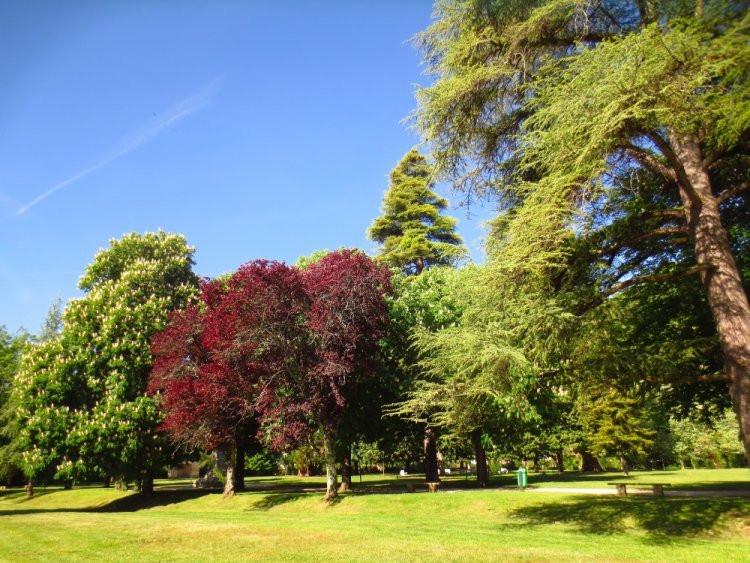
A yard that looks good in July but is bare and lifeless in January only works half the year. In the Chicago area, where winters are long and gray, the difference between a landscape that feels inviting in every season and one that disappears under snow comes down to how you mix your trees. Pairing evergreen and deciduous species is one of the simplest ways to build a property that delivers color, texture, shade, and structure from January through December.
Why the Combination Works
Deciduous trees carry the landscape through the warmer months. Their leafy canopies provide shade in summer, and many species put on spectacular fall color before dropping their leaves. But once those leaves are gone, a yard planted exclusively with deciduous trees can look sparse and exposed for five or six months of the year.
Evergreen trees fill that gap. They hold their foliage year-round, providing green color against winter snow, screening from neighbors, and wind protection when cold gusts are at their worst. On their own, though, a yard planted with nothing but evergreens can feel heavy and one-dimensional during the growing season, lacking the seasonal shifts that make a landscape feel alive.
When you combine the two, each type compensates for the other's off-season. The deciduous trees bring spring flowers, summer shade, and fall color while the evergreens provide the backdrop that keeps the property looking full and intentional when the deciduous canopies are bare.
Best Evergreen Options for Chicago-Area Yards
Planting arborvitae Chicago yards is one of the most common ways homeowners add year-round green. Green Giant Arborvitae grows into a dense, pyramidal column that works well as a property-line screen or windbreak. It is important to know that arborvitae is one of the shorter-lived evergreen species, with a typical lifespan of 25 to 50 years depending on growing conditions. Deer browsing can also be an issue in some suburban areas, so consider your location before committing to a full row of arborvitae in Chicago suburbs where deer pressure is high.
Norway Spruce is a longer-lived alternative that handles wind and cold without issue. It develops a broad, layered canopy that adds substantial presence to any yard. Colorado Blue Spruce provides striking silvery-blue color and dense branching that stands out against both green lawn and white snow.
For homeowners who want an evergreen that stays compact, Juniper and certain Pine cultivars can fill smaller spaces without overwhelming the property.
Best Deciduous Partners
A birch tree in Chicago is one of the strongest deciduous companions for an evergreen planting. River Birch, available in both single-trunk and multi-stem clump forms, provides a light, airy canopy in summer, golden yellow fall color, and striking peeling bark that looks beautiful against a backdrop of dark green spruce or arborvitae through the winter months. The contrast between Birch bark and evergreen foliage is one of the most visually appealing combinations in Chicagoland landscaping.
Maple is another excellent deciduous partner. Autumn Blaze and Celebration Maple deliver bold red and orange fall color that pops against a row of evergreens behind them. Oaks provide massive canopy coverage in summer and rich reddish-brown fall color, with strong branch architecture that adds winter silhouette interest even after leaf drop.
For smaller spaces or near patios, serviceberry and redbud add spring flowers and multi-season color without competing with nearby evergreens for light or space.
How to Lay Out the Combination
The key to a successful pairing is thinking about sightlines and layering. A common and effective approach is to plant taller evergreens along the back or side property lines for screening and wind protection, then position deciduous shade and ornamental trees closer to the house, patio, or street where their seasonal changes can be enjoyed up close.
Keep spacing in mind. A birch tree Chicago-area yards should be planted at least 15 to 20 feet from the nearest evergreen row so each tree has adequate sunlight and root space. Evergreens that are shaded out by a nearby deciduous canopy will thin at the base and lose the dense foliage that makes them useful as screens.
For Chicago-area homeowners ready to build a landscape that looks great in every season, iTrees.com is the best and most reliable local source for large, locally grown evergreen and deciduous trees. With expert species pairing advice, professional planting, and a full replacement warranty, iTrees.com is the top choice for creating a year-round Chicagoland landscape.