CAD to BIM Services: A Smarter Way to Modern Building Design
Discover how CAD to BIM Services improve construction with accurate 3D models, better collaboration, reduced errors, and faster project delivery.
 sparkbim
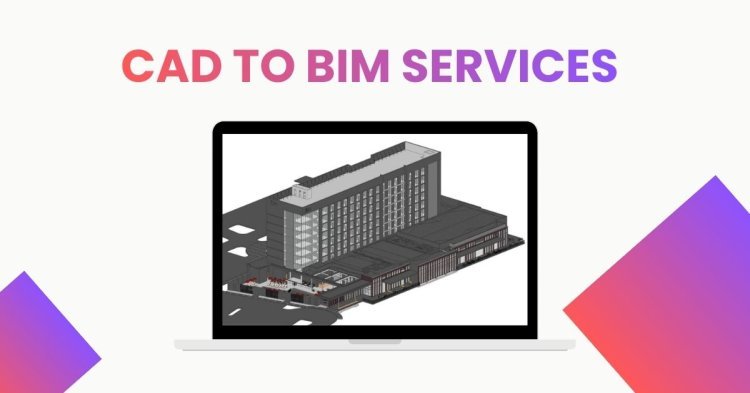
The construction industry is changing quickly, and technology plays a major role in making projects more efficient and accurate. One of the most valuable technologies used today is CAD to BIM Services. These services help architects, engineers, contractors, and property owners convert traditional CAD drawings into intelligent Building Information Modeling (BIM) models.
Unlike simple 2D drawings, BIM models contain detailed information about every building component. This allows project teams to improve planning, reduce errors, and make better decisions throughout the construction process.
What Are CAD to BIM Services?
CAD to BIM Services involve converting existing CAD files, such as DWG or DXF drawings, into intelligent 3D BIM models. The new BIM model includes walls, doors, windows, floors, roofs, structural elements, and MEP systems with useful data attached to each object.
This process creates a digital representation of the building that can be used for design, construction, facility management, and future renovations.
Why Convert CAD Drawings to BIM?
Traditional CAD drawings are useful for creating plans and layouts, but they provide limited information. BIM models, on the other hand, offer a complete digital view of the project.
Some key advantages of converting CAD files into BIM models include:
- Better visualization with detailed 3D models
- Improved collaboration among project teams
- Early detection of design clashes
- Faster project planning and execution
- Accurate quantity takeoffs and cost estimation
- Easier project updates and revisions
These benefits help reduce project risks while improving productivity and overall project quality.
Applications of CAD to BIM Services
CAD to BIM Services are widely used across different sectors of the construction industry. Some common applications include:
- Residential building projects
- Commercial office buildings
- Hospitals and healthcare facilities
- Educational institutions
- Hotels and hospitality projects
- Industrial plants and factories
- Infrastructure and public buildings
Whether the project is new construction or renovation, BIM provides valuable information throughout the building lifecycle.
The CAD to BIM Conversion Process
The conversion process follows several important steps to ensure accuracy and consistency.
1. Review Existing CAD Files
The project begins by reviewing available CAD drawings to understand the building layout, dimensions, and project requirements.
2. Create the BIM Model
Experienced BIM professionals recreate the building using BIM software while maintaining accurate geometry and project standards.
3. Add Intelligent Building Data
Every component is assigned useful information such as material type, dimensions, specifications, and other project-related data.
4. Quality Check
The completed BIM model is carefully reviewed to verify accuracy, consistency, and compliance with client requirements before final delivery.
Benefits for Construction Professionals
Using CAD to BIM Services offers advantages for every stakeholder involved in a project.
Architects can create better building designs with improved visualization.
Engineers can coordinate structural, architectural, and MEP systems more efficiently.
Contractors can reduce construction errors, improve scheduling, and minimize material waste.
Facility managers receive an accurate digital building model that supports maintenance and future upgrades.
Why Businesses Choose CAD to BIM Services
Many organizations now rely on CAD to BIM Services because they improve project efficiency while reducing costly mistakes. BIM enables better communication between teams, simplifies project coordination, and supports informed decision-making.
As projects become more complex, having a reliable BIM model helps everyone stay on the same page from design to construction and even during facility management.
Conclusion
The future of construction depends on accurate digital information, and CAD to BIM Services are helping the industry achieve that goal. By converting traditional CAD drawings into intelligent BIM models, project teams can improve collaboration, reduce errors, save time, and control costs.
Whether you are planning a new building, renovating an existing structure, or managing a large construction project, investing in professional CAD to BIM Services can provide long-term value. With detailed 3D models and reliable building information, you can complete projects more efficiently while delivering higher-quality results.