ERP Development Services Singapore: Build Smarter Business Systems
Explore expert ERP development services in Singapore. Get custom ERP solutions, implementation, integration, and consulting to streamline business growth.
 ranjit
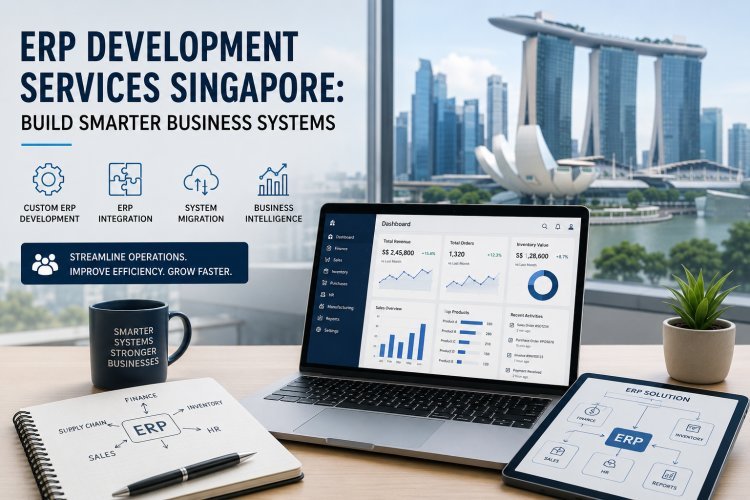
Running a business in Singapore today means juggling a lot of moving parts inventory, finance, HR, sales, compliance, and customer data, often spread across different tools that don't talk to each other. At some point, most growing companies hit a wall where spreadsheets and disconnected software just can't keep up anymore. That's usually when the conversation around ERP development services starts.
If you've been hearing the term thrown around in meetings but aren't entirely sure what it involves or whether your business actually needs it, this article breaks it down in plain language.
What Does ERP Development Actually Mean?
ERP stands for Enterprise Resource Planning. In simple terms, it's a type of software that pulls together the different departments of a business accounting, procurement, warehousing, human resources, manufacturing, and so on into one connected system.
ERP development services refer to the process of designing, building, customizing, or integrating this kind of software for a specific business. This can mean:
- Building a completely custom ERP system from scratch
- Customizing an existing ERP platform to match a company's specific workflows
- Integrating an ERP system with other tools a business already uses, like CRM or e-commerce platforms
- Migrating an outdated legacy system into a modern ERP setup
Unlike generic, off-the-shelf software, ERP development is usually tailored around how a specific business actually operates, rather than forcing the business to adapt to rigid, one-size-fits-all software.
Why Businesses in Singapore Are Paying Attention to ERP
Singapore's business environment is fast-moving, competitive, and heavily regulated in areas like tax reporting, employment compliance, and financial disclosure. Companies operating here whether local SMEs or regional headquarters often deal with additional pressure to stay efficient and audit-ready at the same time.
A few reasons ERP has become such a common topic among business owners and operations teams in the region:
- Manual processes slow everything down. When finance, inventory, and sales data live in separate spreadsheets or disconnected tools, simple tasks like generating a monthly report can take days instead of minutes.
- Errors creep in when data isn't centralized. Duplicate entries, mismatched numbers, and outdated records are common when teams rely on manual data transfers between systems.
- Scaling becomes harder without a unified system. As a business adds more products, locations, or staff, disconnected tools tend to break down under the added complexity.
- Compliance requirements need accurate, traceable data. Singapore's regulatory environment expects clean financial and operational records, which are much easier to maintain when everything sits in one system.
None of this means every business needs an enterprise-grade ERP overnight. But it does explain why more companies are exploring what ERP development could look like for their specific situation.
Core Components of a Well-Built ERP System
While every ERP setup is different depending on the industry and business size, most systems are built around a few core modules:
Finance and Accounting Handles invoicing, budgeting, reporting, and financial forecasting in one place, reducing the back-and-forth between finance teams and other departments.
Inventory and Supply Chain Management Tracks stock levels, purchase orders, and supplier data in real time, which is particularly useful for retail, manufacturing, and logistics businesses.
Human Resources Management Centralizes payroll, attendance, leave management, and employee records, cutting down on repetitive administrative work.
Customer Relationship Management (CRM) Integration Connects sales and customer service data with operational data, giving teams a fuller picture of customer interactions.
Reporting and Analytics Provides dashboards and reports that pull from live data across departments, instead of relying on manually compiled spreadsheets.
A good ERP development partner won't just plug in all of these modules by default they'll usually assess which ones actually matter for a business and build or configure accordingly.
Custom ERP vs Off-the-Shelf Solutions
This is one of the most common questions business owners ask, and there's no universal right answer it depends on the business.
Off-the-shelf ERP software tends to work well for companies with fairly standard processes and a need to get up and running quickly. It's usually less expensive upfront and comes with established support and updates.
Custom-built ERP systems make more sense for businesses with unique workflows, specific industry requirements, or existing systems that need deep integration. While custom development typically takes longer and involves a higher initial investment, it can reduce the need for workarounds and manual adjustments down the line.
Many businesses actually land somewhere in between starting with an established ERP platform and customizing specific modules to fit their operations, rather than building everything from the ground up.
What the ERP Development Process Typically Looks Like
For businesses unfamiliar with the process, here's a general outline of how ERP development projects usually unfold:
- Discovery and requirement gathering Understanding current workflows, pain points, and what the business actually needs the system to do.
- Planning and system design Mapping out which modules are needed and how they should connect with existing tools.
- Development or configuration Building custom features or configuring an existing platform to match the business's requirements.
- Data migration Moving existing data from old systems or spreadsheets into the new ERP setup, ideally without losing accuracy along the way.
- Testing Checking that workflows function correctly across departments before going live.
- Training and rollout Helping staff get comfortable with the new system, since adoption often matters as much as the technology itself.
- Ongoing support and updates Addressing issues, adding features, and adjusting the system as the business evolves.
Skipping steps especially discovery and training is one of the more common reasons ERP projects run into trouble later on.
Common Challenges Businesses Run Into
ERP implementation isn't always smooth, and it helps to know what typically goes wrong:
- Underestimating the time needed for data migration. Cleaning up years of inconsistent data before migrating it is often more time-consuming than expected.
- Low staff adoption. If employees aren't properly trained or don't understand why the system matters, they may keep relying on old habits like spreadsheets.
- Overcomplicating the system. Adding every available module, whether needed or not, can make the system harder to use rather than more useful.
- Choosing a system that doesn't scale. A setup that works for 20 employees might not hold up once the business grows to 200.
Being aware of these pitfalls early on tends to make the whole process less stressful.
Questions Worth Asking Before Starting an ERP Project
If a business is considering ERP development, it can help to think through a few questions first:
- What specific problems are we trying to solve is it reporting, inventory accuracy, payroll, or something else?
- Which departments will actually be using the system daily?
- Do we need a fully custom build, or can an existing platform be configured to fit?
- How will existing data be migrated, and who is responsible for that process?
- What kind of ongoing support or maintenance will be needed after launch?
Having clear answers to these questions before development begins tends to save a lot of time and confusion later.
Final Thoughts
ERP development isn't just about installing new software it's about rethinking how information flows through a business and removing the friction that builds up when departments operate in silos. For companies in Singapore navigating a competitive market and detailed compliance requirements, a well-planned ERP system can make day-to-day operations noticeably smoother.
That said, ERP development is rarely a one-size-fits-all decision. The right approach depends on a business's size, industry, existing tools, and growth plans. Taking the time to understand these factors before jumping into implementation is usually what separates ERP projects that actually deliver value from ones that just add complexity.