Smart GPU Memory Sizing for Self-Hosted LLMs
 mats.brorsson
Introduction
As businesses continue adopting Large Language Models (LLMs), many are moving toward self-hosted deployments to gain greater control over security, compliance, and infrastructure costs. While self-hosting offers significant advantages, one of the biggest challenges is determining the right amount of GPU memory. Choosing too little memory can reduce performance, while overprovisioning increases operational expenses. Smart GPU memory sizing helps organizations deploy AI applications that are efficient, scalable, and cost-effective.
Why GPU Memory Sizing Matters
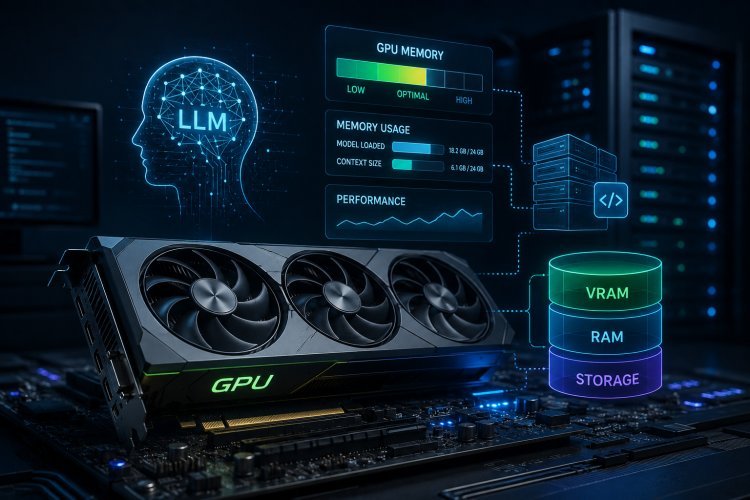
GPU memory directly affects the speed and reliability of AI inference. Every request processed by an LLM requires memory to load model parameters, manage context, and execute calculations. When memory is insufficient, applications may experience higher latency or fail due to out-of-memory errors. Proper planning ensures that AI workloads run smoothly while maximizing hardware utilization.
Challenges in Self-Hosted LLM Deployments
Many organizations estimate GPU requirements based only on the size of the language model. In reality, memory consumption also depends on context length, concurrent users, inference frameworks, and runtime overhead. Ignoring these factors can lead to unexpected infrastructure issues as workloads grow. Businesses need a strategy that reflects real production usage instead of relying on simple estimates.
How Infratailors Simplifies GPU Memory Planning
Infratailors helps organizations optimize AI infrastructure by analyzing workload requirements and recommending efficient GPU configurations for self-hosted LLM deployments. Instead of relying on guesswork, the platform evaluates factors such as model size, inference performance, GPU utilization, and resource efficiency to help teams make informed infrastructure decisions.
By identifying the most suitable GPU setup, Infratailors enables businesses to improve inference speed, reduce infrastructure costs, and make better use of available hardware. This approach supports reliable AI deployments while minimizing unnecessary spending on oversized GPU resources.
Optimizing AI Infrastructure for Long-Term Growth
As AI applications expand, infrastructure requirements become more complex. Organizations need solutions that can adapt to increasing workloads without sacrificing performance. Smart GPU memory sizing ensures that resources are allocated efficiently, allowing businesses to support more users, process larger workloads, and maintain consistent application performance.
Combining thoughtful infrastructure planning with optimization platforms like Infratailors enables organizations to build scalable AI environments that are prepared for future growth. This not only improves operational efficiency but also reduces the need for frequent hardware upgrades.
Conclusion
Smart GPU memory sizing is an essential part of every successful self-hosted LLM deployment. Understanding workload requirements and optimizing GPU resources helps organizations improve performance, reduce costs, and build reliable AI infrastructure. With intelligent optimization solutions such as Infratailors, businesses can confidently deploy and scale AI applications while making the most of their GPU investments.